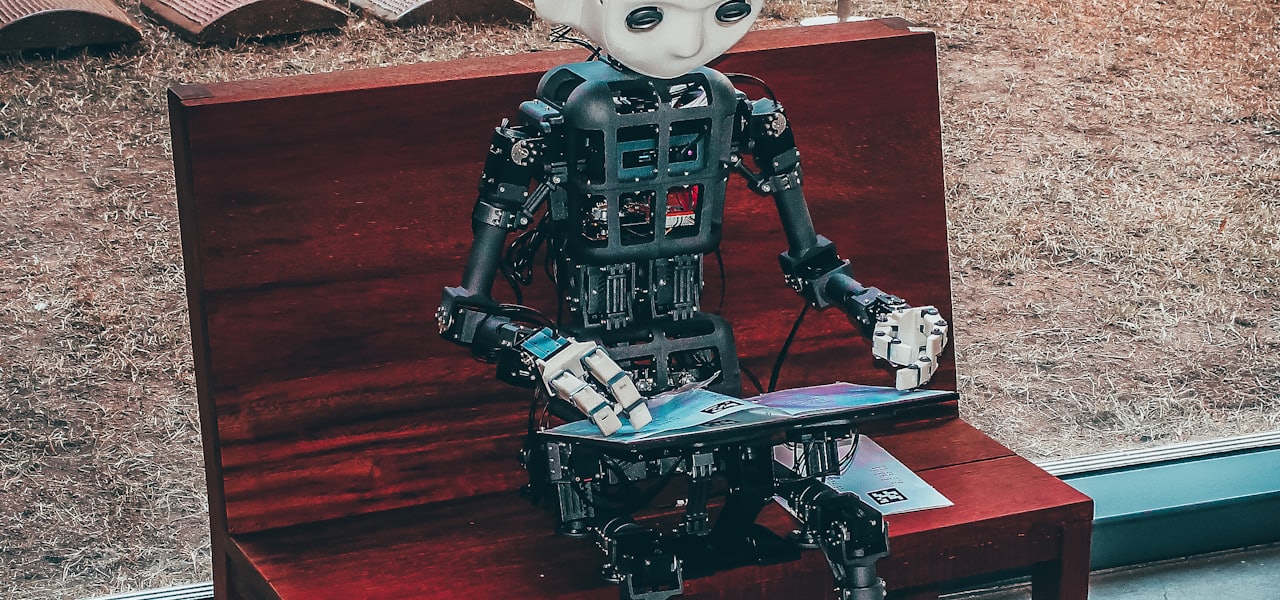
Niki was an artificial intelligence company headquartered in Bangalore, Karnataka. It was founded in May 2015 by IIT Kharagpur graduates Sachin Jaiswal, Keshav Prawasi, Shishir Modi, and Nitin Babel. The Niki android app was launched for a limited beta in June 2015, then released for public during YourStory's TechSparks 2015, and is a Tech30 company. The company raised an undisclosed amount in seed funding from Unilazer Ventures, a Mumbai-based VC firm founded by Ronnie Screwvala, in October 2015. This was followed by another seed funding round by Ratan Tata in May 2016. The company then raised US$2 million in Series A round of funding from SAP.iO, existing investors and some US and German-based investors, among others. Niki.ai shut down in October 2021 as per media reports. Website not working. == Product == The product is an artificial intelligence-powered chatbot which works as an intelligent personal assistant, named Niki. Leveraging natural language processing and machine learning, Niki presents a chat-based natural language user interface to the users where they can interact with Niki in their natural language. Niki understands how users chat in India, deciphers the words, in the context of product/services that they would like to purchase, and comes up with apt recommendations. Initially, it was only available on the Android platform as a mobile app. The company has expanded its operations to the Facebook Messenger and Apple iOS platforms. The company aims to soon be present on more messaging platforms like Slack and WhatsApp. The company currently provides 20+ services to over 2 million consumers, covering a wide spectrum ranging from utility services like mobile recharge, bill payments, travel services like cabs, buses, hotels and entertainment services like movies and events. Services such as flights and healthcare are also planned. == Partnerships == In September 2017, Infosys Finacle joined with Niki.ai to provide chat-based service to banking customers. In August 2017, Niki partnered with LazyPay to enable a 'buy now, pay later' feature for its users.
Secure coding
Secure coding is the practice of developing computer software in such a way that guards against the accidental introduction of security vulnerabilities. Defects, bugs and logic flaws are consistently the primary cause of commonly exploited software vulnerabilities. Through the analysis of thousands of reported vulnerabilities, security professionals have discovered that most vulnerabilities stem from a relatively small number of common software programming errors. By identifying the insecure coding practices that lead to these errors and educating developers on secure alternatives, organizations can take proactive steps to help significantly reduce or eliminate vulnerabilities in software before deployment. Some scholars have suggested that in order to effectively confront threats related to cybersecurity, proper security should be coded or "baked in" to the systems. With security being designed into the software, this ensures that there will be protection against insider attacks and reduces the threat to application security. Implementing secure coding practices is part of the secure by design approach to security engineering. == Buffer-overflow prevention == Buffer overflows, a common software security vulnerability, happen when a process tries to store data beyond a fixed-length buffer. For example, if there are 8 slots to store items in, there will be a problem if there is an attempt to store 9 items. In computer memory the overflowed data may overwrite data in the next location which can result in a security vulnerability (stack smashing) or program termination (segmentation fault). An example of a C program prone to a buffer overflow is If the user input is larger than the destination buffer, a buffer overflow will occur. To fix this unsafe program, use strncpy to prevent a possible buffer overflow. Another secure alternative is to dynamically allocate memory on the heap using malloc. In the above code snippet, the program attempts to copy the contents of src into dst, while also checking the return value of malloc() to ensure that enough memory was able to be allocated for the destination buffer. == Format-string attack prevention == A Format String Attack is when a malicious user supplies specific inputs that will eventually be entered as an argument to a function that performs formatting, such as printf(). The attack involves the adversary reading from or writing to the stack. The C printf function writes output to stdout. If the parameter of the printf function is not properly formatted, several security bugs can be introduced. Below is a program that is vulnerable to a format string attack. A malicious argument passed to the program could be "%s%s%s%s%s%s%s", which can crash the program from improper memory reads. == Integer-overflow prevention == Integer overflow occurs when an arithmetic operation results in an integer too large to be represented within the available space. A program which does not properly check for integer overflow introduces potential software bugs and exploits. Below is a function in C++ which attempts to confirm that the sum of x and y is less than or equal to a defined value MAX: The problem with the code is it does not check for integer overflow on the addition operation. If the sum of x and y is greater than the maximum possible value of an unsigned int, the addition operation will overflow and perhaps result in a value less than or equal to MAX, even though the sum of x and y is greater than MAX. Below is a function which checks for overflow by confirming the sum is greater than or equal to both x and y. If the sum did overflow, the sum would be less than x or less than y. == Path traversal prevention == Path traversal is a vulnerability whereby paths provided from an untrusted source are interpreted in such a way that unauthorised file access is possible. For example, consider a script that fetches an article by taking a filename, which is then read by the script and parsed. Such a script might use the following hypothetical URL to retrieve an article about dog food: https://www.example.net/cgi-bin/article.sh?name=dogfood.html If the script has no input checking, instead trusting that the filename is always valid, a malicious user could forge a URL to retrieve configuration files from the web server: https://www.example.net/cgi-bin/article.sh?name=../../../../../etc/passwd Depending on the script, this may expose the /etc/passwd file, which on Unix-like systems contains (among others) user IDs, their login names, home directory paths and shells. (See SQL injection for a similar attack.) == Regulatory drivers == Secure coding practices are increasingly mandated by regulatory frameworks governing the development and maintenance of software systems that process sensitive data. The Health Insurance Portability and Accountability Act (HIPAA) Security Rule requires covered entities to protect the integrity of protected health information through technical safeguards under 45 CFR 164.312(c)(1) and to implement mechanisms to authenticate electronic protected health information under 45 CFR 164.312(c)(2). The Payment Card Industry Data Security Standard (PCI DSS) version 4.0 Requirement 6.2 mandates that custom software is developed securely, including training developers in secure coding techniques (6.2.2), reviewing custom code for vulnerabilities before release (6.2.3), and addressing common software attacks in development practices (6.2.4).
Hyperscale computing
In computing, hyperscale is the ability of an architecture to scale appropriately as increased demand is added to the system. This typically involves the ability to seamlessly provide and add computing, memory, networking, and storage resources to a given node or set of nodes that make up a larger computing, distributed computing, or grid computing environment. Hyperscale computing is necessary in order to build a robust and scalable cloud, big data, map reduce, or distributed storage system and is often associated with the infrastructure required to run large distributed sites such as Google, Facebook, Twitter, Amazon, Microsoft, IBM Cloud, Oracle Cloud, or Cloudflare. Companies like Ericsson, AMD, and Intel provide hyperscale infrastructure kits for IT service providers. Companies like Scaleway, Switch, Alibaba, IBM, QTS, Neysa, Digital Realty Trust, Equinix, Oracle, Meta, Amazon Web Services, SAP, Microsoft, Google, and Cloudflare build data centers for hyperscale computing. Such companies are sometimes called "hyperscalers". They are recognized for their massive scale in cloud computing and data management, operating in environments that require extensive infrastructure to accommodate large-scale data processing and storage.
Web series
A web series, also known as a short-form series or web show, is a collection of short scripted or unscripted online videos released on the Internet (i.e., World Wide Web), generally in episodic form. A single installment of a web series can be called a webisode or an episode. The scale of a web series is small, and a typical episode can be anywhere from 3 to 15 minutes long (though some may run up to 20 minutes). Web series first emerged in the mid-1990s and became more prominent in the early 2000s. Web series are distributed online on video-sharing websites and apps, such as YouTube, Vimeo, and TikTok, and can be watched on devices such as smartphones, tablets, desktops, laptops, and Smart TVs (or television sets connected to the Internet with a media streaming device). They can also be released on social media platforms. Because of the nature of the Internet, a web series may be interactive and immersive. Web series are classified as new media. Web series are different from streaming television series, as the latter are designed to be watched on streaming platforms such as Netflix, Amazon Prime Video, or Hotstar, with the streaming services offering original productions made for and by them, as well as acquiring the rights to distribute licensed content. The length of a streaming television series episode is 30 to 60 minutes (runtimes can also be longer). Although the design of a web series can be similar to that of a television series, its development and production do not entail the same financial investment required for a television series. The popularity of some web series, however, has led to them being optioned for television. Web series differ from short-form content in that the latter are vertical videos specifically designed for smartphone viewing and intended for fast-paced consumption, with runtimes typically ranging from less than one minute to three minutes. There are film festivals for web series, like Webfest Berlin, NYC Web Fest, LA Web Fest, and Vancouver Web Fest. Awards organizations have also been established to celebrate excellence in web series, such as the Streamys, Webbys, IAWTV Awards, and Indie Series Awards. Most major award ceremonies have also created web series and digital media award categories, including the Emmy Awards and the Canadian Screen Awards. == History == === 1990s === In April 1995, "Global Village Idiots", an episode of the reality-based program Rox on public access cable television in Bloomington, Indiana, was uploaded to the Internet, making Rox the first show distributed via the web. The same year, Scott Zakarin created The Spot, an episodic online story that integrated photos, videos, and blogs into the storyline. Likened to Melrose Place-on-the-Web, The Spot featured a rotating cast of characters playing trendy twenty-somethings who rented rooms in a fabled Santa Monica, California beach house called "The Spot". The Spot earned Infoseek's "Cool Site of the Year," an award which later became the Webby. In January 1999, Showtime licensed the animated sci-fi web series WhirlGirl, making it the first independently produced web series licensed by a national television network. In February 1999, the show premiered simultaneously on Showtime and online. The character occasionally appeared on Showtime, for example, hosting a "Lethal Ladies" programming block, but spent most of her time online, appearing in 100 webisodes. === 2000s === As broadband bandwidth increased in speed and availability, delivering high-quality video over the Internet became a reality. In the early 2000s, the Japanese anime industry began broadcasting original net animation (ONA), a type of original video animation (OVA) series, on the Internet. Early examples of the ONA series include Infinite Ryvius: Illusion (2000), Ajimu (2001), and Mahou Yuugi (2001). In 2000, The Brothers Chaps launched the Adobe Flash-created web series Homestar Runner. After being put on hiatus in 2010, it returned in 2014. In 2002, Matt Jolly (better known as "Krinkels") released the first episode of Madness Combat to Newgrounds. The show is still ongoing, with the latest episode "Madness Combat 12: Contravention" released on Twitch in September 2024. In 2003, Microsoft launched MSN Video, offering NBC-related content. Its web series, Weird TV 2000, a spin-off of the syndicated television series Weird TV, featured dozens of shorts, comedy sketches, and mini-documentaries produced exclusively for MSN Video. The video-sharing site YouTube was launched in early 2005, allowing users to share television programs. YouTube co-founder Jawed Karim said the inspiration for YouTube first came from Janet Jackson's role in the 2004 Super Bowl incident, when her breast was exposed during her performance, and later from the 2004 Indian Ocean tsunami. Karim could not easily find video clips of either event online, which led to the idea of a video-sharing site. From 2003 to 2006, many independent web series gained significant popularity, most notably the science fiction series Red vs. Blue by Rooster Teeth. The series was distributed independently via online portals YouTube and Revver, as well as the Rooster Teeth website, acquiring over 100 million social media views during its run. (Rooster Teeth would eventually create the computer-animated web series RWBY in 2013.) In 2004, the adult-animated series Salad Fingers was created, which amassed a cult following. The comedy show The Burg, hailed as the internet's first sitcom and starring Kelli Giddish and Lindsey Broad, rapidly gained an audience and press attention before its creators signed a creation deal with Michael Eisner. The drama Sam Has 7 Friends, which ran in the summer and fall of 2006, was nominated for a Daytime Emmy Award and was temporarily removed from the Internet when it was also acquired by Eisner. In 2004–2005, Spanish producer Pedro Alonso Pablos recorded a series of video interviews featuring actors and directors such as Guillermo del Toro, Santiago Segura, Álex de la Iglesia, and Keanu Reeves, which were distributed through his own website. lonelygirl15, California Heaven, "The Burg", and SamHas7Friends also gained popularity during this time, acquiring audiences in the millions. (Science fiction thriller lonelygirl15 was so successful that it secured a sponsorship deal with Neutrogena in 2007.) In 2004, Stewart St. John, executive producer and head writer of 1990s webisodies The Spot, revived the brand for online audiences as The Spot (2.0), with a new cast, and as a separate soap opera on Sprint PCS Vision-enabled cell phones, creating the first American mobile phone series. St. John and partner Todd Fisher produced over 2,500 daily videos of the mobile soap, driving story lines across platforms to its web counterpart. In 2007, the creators of lonelygirl15 followed up on the show's success with KateModern, a comedy-drama series that debuted on social network Bebo, and took place in the same fictional universe as their previous show. Big Fantastic created and produced the soap opera Prom Queen, financed and distributed by Michael Eisner's production firm Vuguru, and debuted the series on MySpace. Vuguru partnered with Mark Cuban's channel HDNet to release All-for-nots, a mockumentary series by The Burg creators Kathleen Grace and Thom Woodley, which debuted at the SXSW Festival in 2008. These web series highlighted interactivity with the audience in addition to the narrative on relatively low budgets. In contrast, the eight-episode show Sanctuary, starring actor/producer Amanda Tapping, cost $4.3 million to produce. Both Sanctuary and Prom Queen were nominated for a Daytime Emmy Award. Award-winning producer/director Marshall Herskovitz created the drama Quarterlife, which debuted on MySpace and was later distributed on NBC. In 2008, major television studios began releasing web series, such as the ABC comedy show Squeegies, the NBC sci-fi show Gemini Division, and the Bravo reality series The Malan Show. Warner Bros. relaunched The WB as an online network beginning with original mystery web series, Sorority Forever, created and produced by Big Fantastic and executive produced by McG. Meanwhile, MTV announced a new original web series created by Craig Brewer, $5 Cover, that brought together the indie music world and new media expansion. Joss Whedon created, produced, and self-financed musical comedy-drama Dr. Horrible's Sing-Along Blog starring Neil Patrick Harris and Felicia Day. Big Fantastic wrote and produced Foreign Body, a mystery web series that served as a prequel to Robin Cook's novel of the same name. Beckett and Goodfried founded a new Internet studio, EQAL, and produced a spin-off of lonelygirl15 titled LG15: The Resistance. The mainstream press began to provide coverage. In the United Kingdom, KateModern ended its run on Bebo. Bebo also hosted a six-month-long reality travel show, The Gap Year, produced by Endemol UK, and produced an interactive sci-fi drama Kirill for
General time- and transfer constant analysis
The general time- and transfer-constants (TTC) analysis is the generalized version of the Cochran-Grabel (CG) method, which itself is the generalized version of zero-value time-constants (ZVT), which in turn is the generalization of the open-circuit time constant method (OCT). While the other methods mentioned provide varying terms of only the denominator of an arbitrary transfer function, TTC can be used to determine every term both in the numerator and the denominator. Its denominator terms are the same as that of Cochran-Grabel method, when stated in terms of time constants (when expressed in Rosenstark notation). however, the numerator terms are determined using a combination of transfer constants and time constants, where the time constants are the same as those in CG method. Transfer constants are low-frequency ratios of the output variable to input variable under different open- and short-circuited active elements. In general, a transfer function (which can characterize gain, admittance, impedance, trans-impedance, etc., based on the choice of the input and output variables) can be written as: H ( s ) = a 0 + a 1 s + a 2 s 2 + … + a m s m 1 + b 1 s + b 2 s 2 + … + b n s n {\displaystyle H(s)={\frac {a_{0}+a_{1}s+a_{2}s^{2}+\ldots +a_{m}s^{m}}{1+b_{1}s+b_{2}s^{2}+\ldots +b_{n}s^{n}}}} == The denominator terms == The first denominator term b 1 {\textstyle b_{1}} can be expressed as the sum of zero value time constants (ZVTs): b 1 = ∑ i = 1 N τ i 0 {\displaystyle b_{1}=\sum _{i=1}^{N}\tau _{i}^{0}} where τ i 0 {\textstyle \tau _{i}^{0}} is the time constant associated with the reactive element i {\textstyle i} when all the other sources are zero-valued (hence the superscript '0'). Setting a capacitor value to zero corresponds to an open circuit, while a zero-valued inductor is a short circuit. So for calculation of the τ i 0 {\textstyle \tau _{i}^{0}} , all other capacitors are open-circuited and all other inductors are short-circuited. This is the essence of the ZVT method, which reduces to OCT when only capacitors are involved. All independent sources are also zero-valued during the time constant calculations (voltage sources short-circuited and current source open-circuited). In this case, if the element in question (element i {\textstyle i} ) is a capacitor, the time constant is given by τ i 0 = R i 0 C i {\displaystyle \tau _{i}^{0}=R_{i}^{0}C_{i}} and when element i {\textstyle i} is an inductor is it given by: τ i 0 = L i / R i 0 {\displaystyle \tau _{i}^{0}=L_{i}/R_{i}^{0}} . where in both cases, the resistance R i 0 {\textstyle R_{i}^{0}} , is the resistance seen by elements i {\textstyle i} (denoted by subscript), when all the other elements are zero-valued (denoted by the zero superscript). The second-order denominator term is equal to: b 2 = ∑ i = 1 N − 1 ∑ j = i + 1 N τ i 0 τ j i = ∑ i 1 ⩽ i ∑ j < j ⩽ N τ i 0 τ j i {\displaystyle b_{2}=\sum _{i=1}^{N-1}\sum _{j=i+1}^{N}\tau _{i}^{0}\tau _{j}^{i}=\sum _{i}^{1\leqslant i}\sum _{j}^{ Parasolid is a geometric modeling kernel originally developed by Shape Data Limited, now owned and developed by Siemens Digital Industries Software. It can be licensed by other companies for use in their 3D computer graphics software products. Parasolid's abilities include model creation and editing utilities such as Boolean modeling operators, feature modeling support, advanced surfacing, thickening and hollowing, blending and filleting, and sheet modeling. It also incorporates modeling with mesh surfaces and lattices. Parasolid also includes tools for direct model editing, including tapering, offsetting, geometry replacement and removing feature details with automated regeneration of surrounding data. Parasolid also provides wide-ranging graphical and rendering support, including hidden-line, wireframe and drafting, tessellation, and model data inquiries. To use Parasolid effectively, software developers need knowledge of CAD in general, computational geometry, and topology. Parasolid is available for Windows (32-bit, 64-bit and AArch64), Linux (64-bit and AArch64), macOS (Apple silicon and Intel), iOS, and Android. == Parasolid XT format == Parasolid parts are normally saved in XT format, which usually has the file extension .X_T. The format is documented and open. There is also a binary version of the format, usually with an .X_B extension, which is somewhat more compact. Both .X_T and .X_B are used for parts files. == Applications == It is used in many computer-aided design (CAD), computer-aided manufacturing (CAM), computer-aided engineering (CAE), product visualization, and CAD data exchange packages. Notable uses include: The following outline is provided as an overview of and topical guide to electronics: Electronics – branch of physics, engineering and technology dealing with electrical circuits that involve active semiconductor components and associated passive interconnection technologies. == Branches == === Classical electronics === Analog electronics Digital electronics Electronic instrumentation Electronic engineering Microelectronics Optoelectronics Power electronics Printed electronics Semiconductor technology Schematic capture Thermal management Automation Electronics === Advanced topics === Atomtronics Bioelectronics Failure modes of electronics Flexible electronics Low-power electronics Microelectromechanical systems (MEMS) Molecular electronics Nanoelectronics Organic electronics Photonics Piezotronics Quantum electronics Spintronics === History of electronics === History of electronic engineering History of radar History of radio History of television == General concepts == === Data converters === Analog-to-digital converters (ADC) Aliasing Successive approximation ADC Dual-slope ADC Quantization Sensor resolution Sampling Delta-sigma ADC Digital-to-analog converters (DAC) Digital potentiometer Binary weighted resistor converter Charge distribution DAC Pulse width modulator Reconstruction filter The R2R ladder === Digital electronics === Binary decision diagrams Boolean algebra Combinational logic Counters (digital) De Morgan's laws Digital circuit Formal verification Karnaugh maps Logic families Logic gate Logic minimization Logic simulation Logic synthesis Registers Sequential logic State machines Truth tables Transparent latch === Electrical element/discretes === Passive elements: Capacitor Inductor Memristor Resistor Transformer Active elements: Diode Zener diode Light-emitting diode PIN diode Schottky diode Avalanche diode Laser diode Microcontroller Operational amplifier Thyristor DIAC TRIAC IGBT Transistor Bipolar transistor (BJT) Field effect transistor (FET) Darlington transistor Other components Aural devices Battery (electricity) Crystal oscillator Electromechanical devices Sensors Surface acoustic wave (SAW) === Electronics analysis === Electronic packaging Electronic circuit simulation Electronic design automation Electronic noise Mathematical methods in electronics Thermal management of electronic devices and systems === Electronic circuits === Amplifiers Differential amplifiers Feedback amplifiers Power amplifiers Comparators Converters Filters Active filters Passive filters Digital filters Oscillators Phase-locked loops Timers === Electronic equipment === Air conditioner Breathalyzer Central heating Clothes dryer Computer/Notebook Dishwasher Freezer Home robot Home entertainment system Information technologies Cooker Microwave oven Refrigerator Robotic vacuum cleaner Tablet Telephone Water heater Washing machine === Television === Analog television History of television Television show Television broadcaster Timeline of the introduction of television in countries Mechanical television Color television Digital television Digital television transition Smart television Streaming television Internet Protocol television 3D television Terrestrial television ==== Television broadcasting ==== === Electronic instrumentation === Ammeter Capacitance meter Distortionmeter Electric energy meter LCR meter Microwave power meter Multimeter Network analyzer Ohmmeter Oscilloscope Psophometer Q meter Signal analyzer Signal generator Spectrum analyzer Transistor tester Tube tester Wattmeter Vectorscope Video signal generator Voltmeter VU meter === Memory technology === Flash memory Hard drive systems Optical storage Probe Storage Programmable read-only memory Read-only memory Solid-state drive (SSD) Volatile memory === Microcontrollers === Features Analog-to-digital converter Central processing unit (CPU) Clock generator (Quartz timing crystal, resonator or RC circuit) Debugging support Digital-to-analog converters Discrete input and output bits In-circuit programming Non-volatile memory (ROM, EPROM, EEPROM or Flash) Peripherals (Timers, event counters, PWM generators, and watchdog) Serial interface (Input/output such as serial ports (UARTs)) Serial communications (I²C, Serial Peripheral Interface and Controller Area Network) Volatile memory (RAM) 8-bit microcontroller families: AVR - PIC - COP8 - MCS-48 - MCS-51 - Z8 - eZ80 - HC08 - HC11 - H8 - PSoC Some notable suppliers: ARM Atmel Cypress Semiconductor Freescale Intel MIPS Microchip Technology NXP Semiconductors Parallax Propeller PowerPC Rabbit 2000 Renesas RX, V850 Silicon Laboratories STMicroelectronics Texas Instruments Toshiba TLCS === Optoelectronics === Optical fiber Optical properties Optical receivers Optical system design Optical transmitters === Physical laws === Ampère's law Coulomb's law Faraday's law of induction/Faraday-Lenz law Gauss's law Kirchhoff's circuit laws Current law Voltage law Maxwell's equations Gauss's law Faraday's law of induction Ampère's law Ohm's law === Power electronics === Power Devices Gate turn-off thyristor MOS-controlled thyristor (MCT) Power BJT/MOSFET Static induction devices Electric power conversion DC to DC DC to DC converter Voltage stabiliser Linear regulator AC to DC Rectifier Mains power supply unit (PSU) Switched-mode power supply DC to AC Inverter AC to AC Cycloconverter Transformer Variable frequency transformer Voltage converter Voltage regulator Power applications Automotive applications Capacitor charging applications Electronic ballasts Energy harvesting technologies Flexible AC transmission systems (FACTS) High frequency inverters HVDC transmission Motor controller Photovoltaic system Conversion Power factor correction circuits Power supply Renewable energy sources Switching power converters Uninterruptible power supply Wind power === Programmable devices === Application-specific integrated circuit (ASIC) Complex programmable logic device (CPLD) Erasable programmable logic device (EPLD) Simple programmable logic device (SPLD) Macrocell array Programmable array logic (PAL) Programmable logic array (PLA) Programmable logic device (PLD) Field-programmable gate array (FPGA) VHSIC Hardware Description Language (VHDL) Verilog Hardware Description Language Some notable suppliers: Altera - Atmel - Cypress Semiconductor - Lattice Semiconductor - Xilinx === Semiconductors theory === Properties Bipolar junction transistors Capacitance voltage profiling Charge carrier Charge-transfer complex Deep-level transient spectroscopy Depletion region Density of states Diode modelling Direct band gap Electronic band structure Energy level Exciton Field-effect transistors Metal–semiconductor junction MOSFETs N-type semiconductor Organic semiconductors P–n junction P-type semiconductor Photoelectric effect Quantum tunneling Semiconductor chip Semiconductor detector Solar cell Transistor model Thin film Tight-binding model Device Fabrication Semiconductor device fabrication Semiconductor industry Semiconductor consolidation == Applications == Audio electronics Automotive electronics Avionics Control Systems Consumer electronics Data acquisition E-health Electronic book Electronics industry Electronic warfare Embedded systems Home automation Integrated circuits Marine electronics Microwave technology Military electronics Multimedia Nuclear electronics Open hardware Radar and Radionavigation Radio electronics Terahertz technology Video hardware Wired and Wireless CommunicationsParasolid
Outline of electronics